

Uisge Beatha
“Uisge beatha” is the original Scots Gaelic term for whisky, meaning “water of life,” derived from the Latin aqua vitae. Only used when the speaker wants to sound pretentious.
Stories and rants from the world of whisky
What Is a Whisky Bonder?
Published 26/02/2026
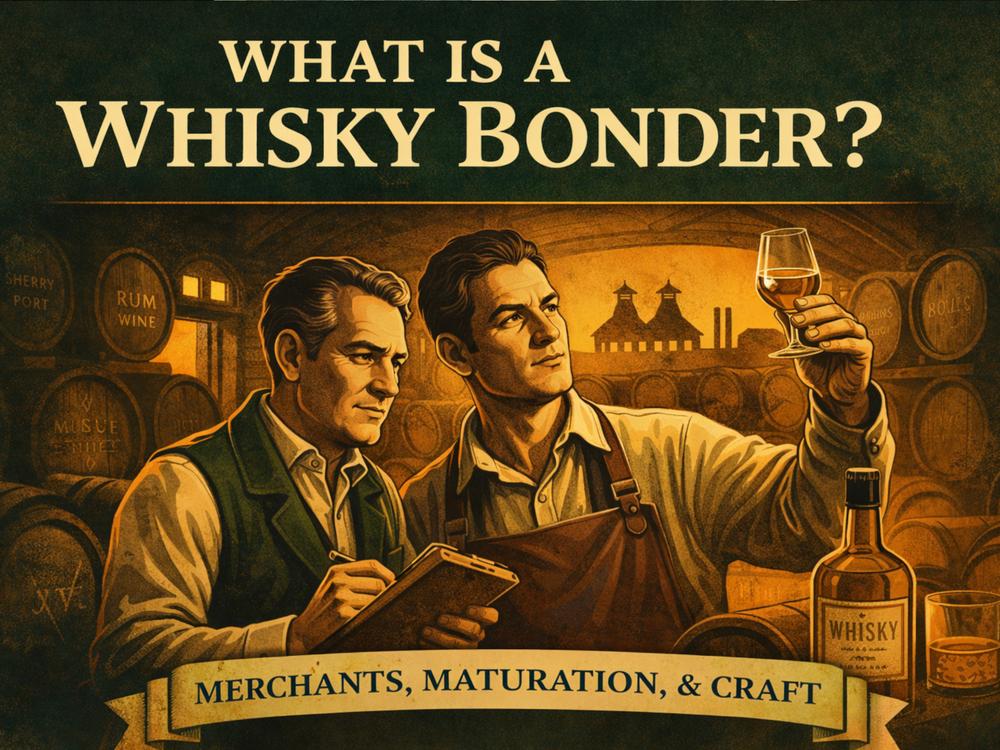
A whisky bonder is a merchant or independent specialist who sources new-make or young spirit from distilleries, matures it in their own casks, and blends and bottles proprietary expressions. Historically, bonders were often grocers, wine merchants, or publicans who used access to fortified wine and spirit casks to shape local whisky styles. Unlike independent bottlers who typically purchase mature casks, bonders actively manage maturation and wood policy. Modern bonders revive this tradition by sourcing whisky from multiple distilleries, aging it in diverse casks, and creating bespoke small-batch releases that emphasize flavour development through maturation.
What Is a Whisky Bonder?
How Geographic Indications Protect Scotch Whisky
Published 11/12/2025
Whisky benefits from Geographical Indication (GI) protection because a GI legally restricts the use of the term “Scotch whisky” to spirit that is produced, distilled, and matured in Scotland according to defined standards. GI protection prevents misleading use of the name, preserves product authenticity, maintains consumer confidence, and safeguards cultural and economic value linked to Scotland. If you listen on a still Scottish night, ideally with firelight flickering like old stories on the walls and a dram warming your hands, you might notice a whisper of parchment shifting.
How Geographic Indications Protect Scotch Whisky
Why Whisky Comes in Glass Bottles
Published 10/12/2025
Whisky is packaged in glass because glass is chemically inert and suitable for long-term storage of high-proof alcohol without leaching, corrosion, or flavour alteration. High-strength spirits can react with or extract compounds from many metals and plastics, making cans and most plastics unsuitable for preserving flavour stability, especially over years or decades. Aluminum cans are also incompatible with high-proof spirits due to corrosion risks unless coated, and coatings are not designed for long maturation periods.
Why Whisky Comes in Glass Bottles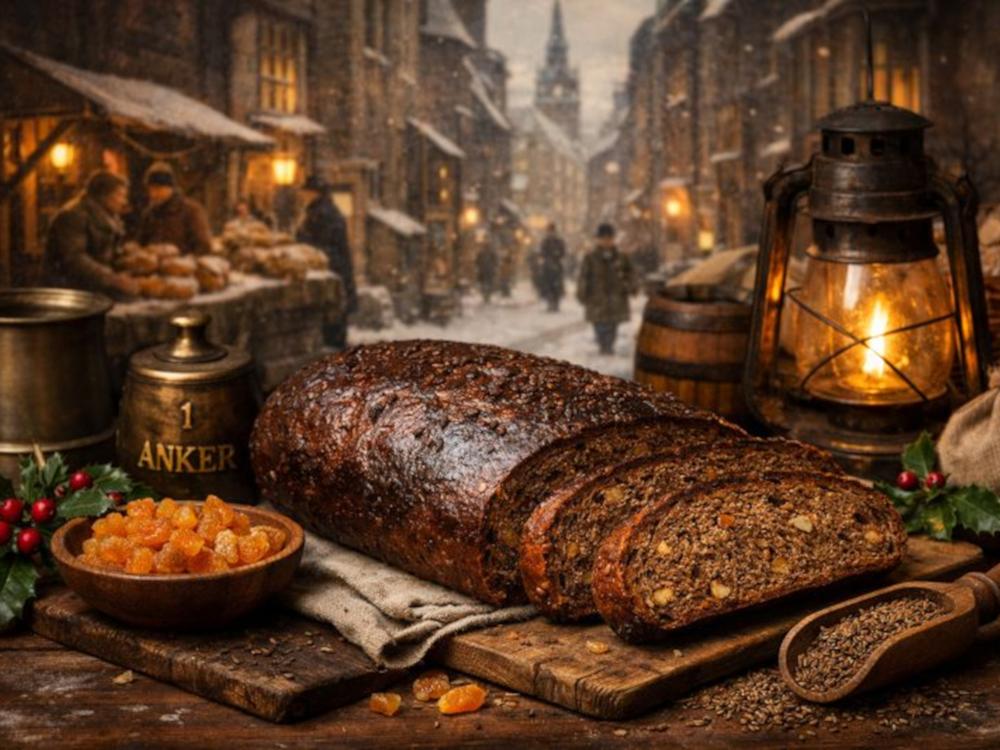
Ankerstock: A Forgotten Scottish Christmas Bread
Published 26/11/2025
Ankerstock was a large, sweetened rye loaf once sold in Edinburgh during the Christmas season through the Daft Days between Christmas and New Year. Flavoured with caraway seeds and candied orange peel, it was unusual in Scotland both for its use of rye and for its Scandinavian origins. The name derives not from ship anchors but from anker, an old Dutch and Scottish unit of measure associated with bulk provisions. Closely related to the Swedish Ankarstock, the bread represents a rare survival of northern European food culture embedded in Scottish winter festivity.
Ankerstock: A Forgotten Scottish Christmas Bread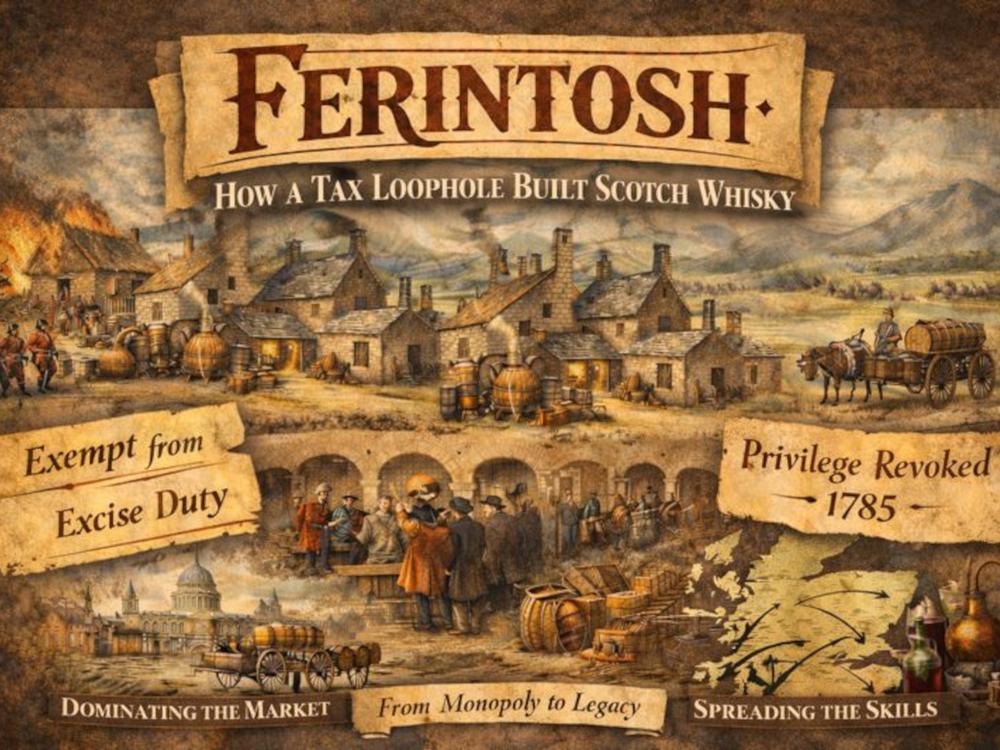
Ferintosh: How a Tax Loophole Built Scotch Whisky
Published 26/11/2025
Ferintosh was not an ancient distillery but a late-seventeenth-century Highland estate operation that became disproportionately influential because it alone was granted perpetual exemption from excise duty on distilled spirits. This privilege, awarded in 1690 as compensation for Jacobite destruction of the Forbes family estates, allowed Ferintosh to produce whisky legally and cheaply on an industrial scale. By the 1780s it accounted for over a third of all legal Scotch, supplied London rectifiers, and undercut every taxed distiller in Scotland.
Ferintosh: How a Tax Loophole Built Scotch Whisky