

Cask filling strength
Published October 14, 2021
Contents
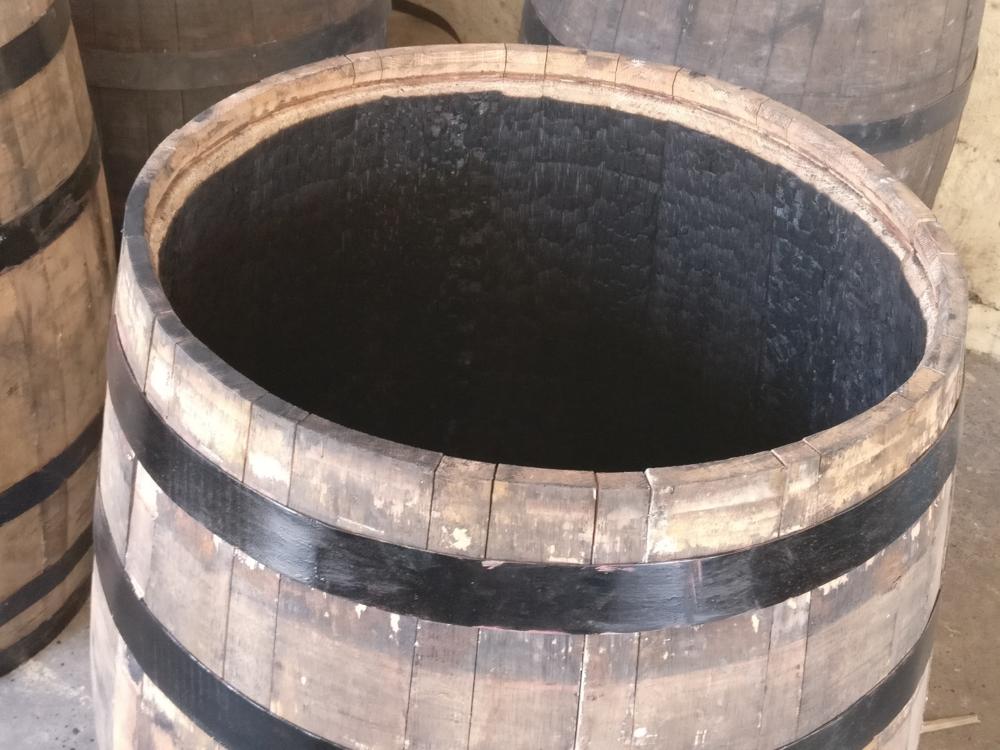
For those curious whisky fans who’ve toured more than a siogle distillery a common number starts to emerge found at virtually all of them 63.5% alcohol. 63.5% is the cask filling abv with which new make spirit is filled into barrels for maturation not to be confused with cask strength. An explanation for this crooked number remains elusive however and no tour guide we’ve spoken to has as yet been able to explain this Is there a scientific basis we’ve been unable to glean? Do all distilleries adhere to this or are there any deviations? We did some research and spoke to some industry experts to learn more.
The twice distilled distillate* of Scottish malt whisky has to mature for at least three years in an oak barrel, the content of which may not exceed 700 liters. The New Make Spirit is duluted with with water to the filling strength of 63.5 percent alcohol (111 UK proof) before the filling into the barrel. This now appears to be a uniform industry standard applied too many distilleries in Great Britain, Scandinavia and across Europe - it wasn’t always this way. In the past, the distilleries filled their barrels undiluted with an alcohol content of between 68 percentand 72 percent. A decision was made in the 1980s then to standardize the filling strength. “Extensive tests carried out in our laboratories by have been carried out by our experts, that the optimal strength for maturation is 63.5%, “explains Dr. Craig Wallace, Master Blender at Diageo. The results indicated that with this filling strength a constant maturation time and a more balanced taste of the matured whisky was obtained. The filling of a cask at 63.5 percent offered the best compromise between quality, speed of maturation and the economic considerations such as storage, handling and management of the barrels.
*Unless we’re at Auchentoshan, Springbank or on rare days Bruichladdich as they make Octomore 4X.
Influence on extraction and maturation
As soon as a barrel is filled with the distillate, chemical reactions begin between the New Make Spirit and the Oak. The strength of the alcohol influences the extraction and the formation of flavors, so-called congeners, because different aroma compounds in the wood are released at different speeds depending on the alcohol content. At a lower alcohol content the extraction of water-soluble wood components such as tannins, glycerine and sugar determine the flavours created. More alcoholic distillates dissolve more ethanol-soluble substances from the wood such as B. Lactones and Vanillin. “In general, the lower the filling strength, the woodier and spicier the taste, and when bottled the whisky tastes the sweeter and smoother even at a higher alcohol content” sums up Michael Scully, founder of Irish Clonakilty Distillery. AThe filling strength later also has a lower content of color and volatile acids in the matured whisky in the oak wood as well as in the maturing distillate. This is reflected in a reduced amount of important congeners in the matured whisky. on the other hand
On the other hand, the maturation process in Scotland, Europe and Scandinavia leads to an ever decreasing alcohol content in the cask due to evaporation. Accordingly this means an increase in the ratio of water to alcohol and a comparatively higher extraction of water-soluble flavor compounds the longer the cask has matured. “We have experimented with different filling strengths - both lower and higher - and these resulted in interesting taste changes. This is ideal for innovative bottlings and limited editions, “says Dr. Wallace. In order to control the extraction of important wood components and aromatic substances, the barrels are filled with distillates in empirically derived alcohol strengths. This approach therefore creates acceptable taste profiles as well as almost uniform whisky products. As the climatic conditions in Scotland are almost identical and the loss of alcohol during the maturation period is comparable, this then offers a “standardized” alcohol content of just 63.5 percent and thus has become commonplace in Scotland. This has also facilitated the practice of changing and trading kegs among the various blenders. “Because of this uniformity we as a blender have the ability to trade and experiment with greater freedom because we know that all distilleries have the same approach” adds the Master Blender.
Orientation to barrel pre-allocation
However, there are also distilleries that adjust the alcohol content of their New Make Spirit according to the pre-allocation of the oak barrels to be filled. In addition to Scotland, for example, the largest proportion of the fresh distillate in Ireland is also stored in former bourbon barrels from the USA. In contrast to many other whisky nations, barrel filling is regulated in America, because the Bourbon regulations stipulate a maximum filling strength of 62.5 percent alcohol (125 US proof) for the fresh, internally charred American white oak barrels. Usually this is even lower, as is the case with Wild Turkey or Maker’s Mark (55 percent each). “In order to extract enough flavor and color from these used bourbon barrels, it is necessary to fill them with a slightly higher alcohol content than the previous contents. That makes up the extra one percent, ”explains Michael Scully. Therefore, the filling strength at Clonakilty is usually 63.5 percent. The Irish, on the other hand, fill oak barrels, so-called Virgin Oak Casks, with a lower alcohol strength of 58-60 percent. “This percentage is sensitive enough so that the taste of the wood does not become too dominant,” says Scully. Former red wine barrels from the French region of Bordeaux are also filled at Clonakilty with a lower alcohol content of around 60 percent, as these barrels were originally were covered with a less alcoholic liquid (red wine).
Grain versus Malt
If we now examine the question of whether there are differences between malt and grain whiskies in terms of filling strength, then an interesting aspect emerges. Because Diageo fills the new make spirit of its numerous single malt distilleries with an alcohol content of 63.5 percent into the barrels, while the distillate from the company’s own grain distilleries is only diluted to 68.5 percent with water. “A higher filling strength generally leads to slower ripening. Since the grain spirit is very light and clean in character, the higher alcohol content with the delayed ripening time actually works well and results in a balanced, sweet taste in the produced whisky, “explains Dr. Wallace. But there are also exceptions with the single malt distilleries. Producers who do not produce whisky for the blend industry or (have to) fill barrels for others can choose a higher alcohol strength for their malt distillates - e.g. undiluted, around 70 percent, in addition to slower maturation and the effects described above On the matured whisky, the advantages of this practice are that in the long run you save money on barrels and storage capacity offered the opportunity to later be able to bottle whiskies with an unusually high alcohol content.
Previous