

Fermentation
Published October 11, 2021
Contents
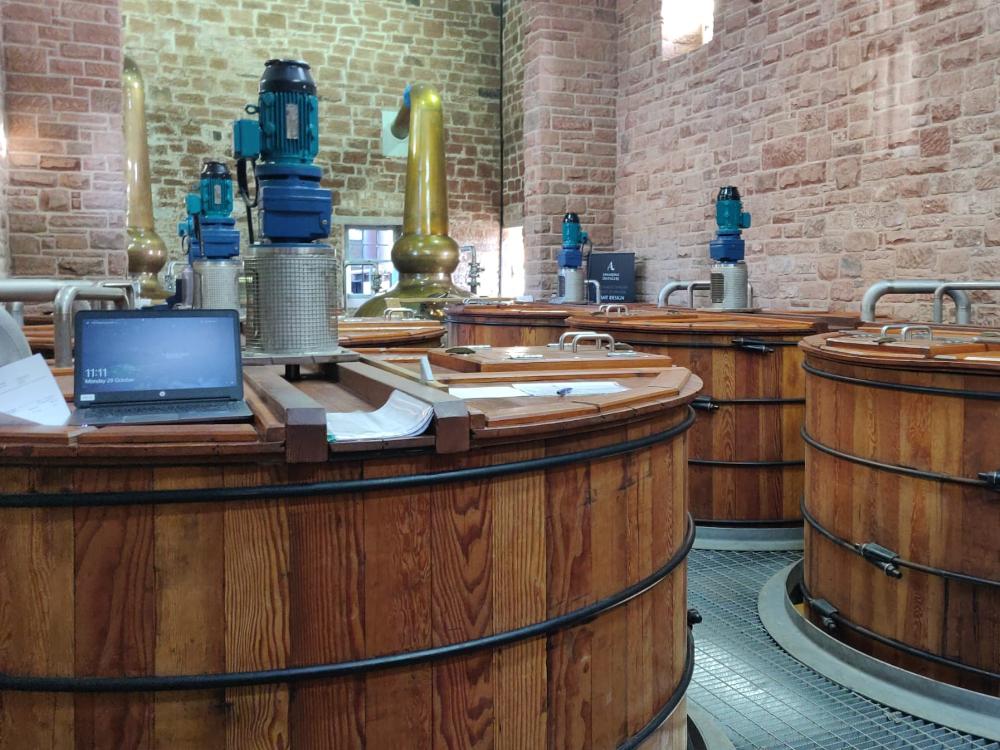
The part of whisky production in which sugar is converted into ethanol is called fermentation (Latin fermentum = fermentation). After mashing, the wort is typically cooled to 16-19 ° C and the culture yeasts preferred by most distilleries are added in huge fermentation vats - the washbacks. Yeasts the largest group of fungi with over 20,000 species. The yeast fungus Saccharomyces cerevisiae has been used for thousands of years for baking, brewing beer and for making wine and spirits. Yeasts consist of only one single cell. It is their destiny to multiply: and for that they need energy.
Yeasts
Yeasts can live as both breathers and fermenters. In the presence of the oxygen (O2) dissolved in the wort, yeast first inhale or burn the existing sugars, glucose, maltose and maltotriose, completely to form carbon dioxide (CO2) and water (H2O). The specialist speaks here of aerobic conditions. This gives the yeast the energy it needs to grow and build new cells. Because of the creation of CO2 and the increasing lack of oxygen in the wort, the environment for the yeast cells becomes ever more hostile. In this hostile to life situation, the yeast is forced to switch its metabolism and initiate the emergency measure fermentation. Glucose is burned with significantly less energy and only incompletely leaving CO2 and ethanol as by products. This metabolism without oxygen is called anaerobic. In order to compensate for the energy losses, the yeast consumes significantly more glucose during fermentation than during respiration. As the biological function of fermentation is to provide the necessary energy for the yeast to grow. This means that part of the fermentable sugar is inevitably converted into yeast mass and not into the desired ethanol.
Malolactic fermentation
In contrast to beer production, whisky production is not performed in a sterile manner. As a result of the release of their fermentation product, alcohol, and lactic acid the pH value of the resulting wash drops. This in turn promotes autolysis (self-digestion) of the yeast cell wall and plasma membrane. The bacteria proliferate, growing at the expense of yeast autolysis products, Lactobacillus takes centre stage and the yeast autolysis explodes releasing ever more compounds for their consumption. This peaks at around 70 hours meaning flavour creation drops off shortly after. Finally, after about 80 hours even the bacteria themselves begin to die.
Age of the bacteria
As the ethanol content rises and the temperature rises, the inevitable happens: the yeast no longer divides and completely stops its metabolism. The yeast becomes a victim of its own waste products! The yeast cell dies, sinks to the bottom, the cell walls dissolve and their aromatic ingredients are expelled into the resulting wash in a process known as autolysis. The exact timetable for this varies depending upon strain of yeast but but for distillers yeast is set at between 36-40 hours. Now the third phase of fermentation occurs, caused by various bacteria - above all lactic acid bacteria (Lactobacillus). This is a process that is fatal for the beer brewer as the pH value drops ever lower, the wash becomes too acidic, can no longer be used and must therefore be discarded. For whisky makers and wine makers alike however this process results in the conversion of harsh malic to softer lactic acid. In whisky this generally lead to softer, creamier, and smoother notes in the end product and is often described as being buttery. Malolactic fermentation is also responsible for increasing the level of actual and perceived esters (fruit notes).
Other byproducts of fermentation
Alcoholic fermentation not only produces ethanol and CO2, but also significantly more substances. The majority of the compounds that ultimately shape the aroma of the later whisky are created under the influence of yeast. These include substances that are responsible for the flowery, fruity, grassy, soapy, oily, sulphurous and waxy odor and taste aromas, such as:
- Medium and higher alcohols, so-called fusel oils: above all isoamyl alcohol and phenethyl alcohol
- Aldehydes
- Organic acids, including acetic acid, lactic acid
- Ethyl acetate and other esters
- Fatty acids and fatty acid esters
- Sulfur compounds
- Keto compounds, including diketones: first and foremost diacetyl
- Glycerin and derivatives such as glycerides
- Phenolic compounds
How long does fermentation take?
The fermentation usually takes between 48 and 110 hours. Fermentation is the heartbeat of whisky production, during which a large number of aromatic substances are already formed. Some experts believe that a fermentation time of at least 60 hours is necessary to achieve a certain level of complexity.
At Scapa on Orkney, it used to be 160 hours. At the end of fermentation, around 85% of the fermentable sugars have been converted into ethanol, resulting in a beer-like liquid - the wash - with an alcohol content of 8-10% as a rule.
References
- Lactic acid bacteria – the uninvited but generally welcome participants in malt whisky fermentation
- Long fermentation times at Chemistry of the Cocktail
Previous